Same Skill, Different Route
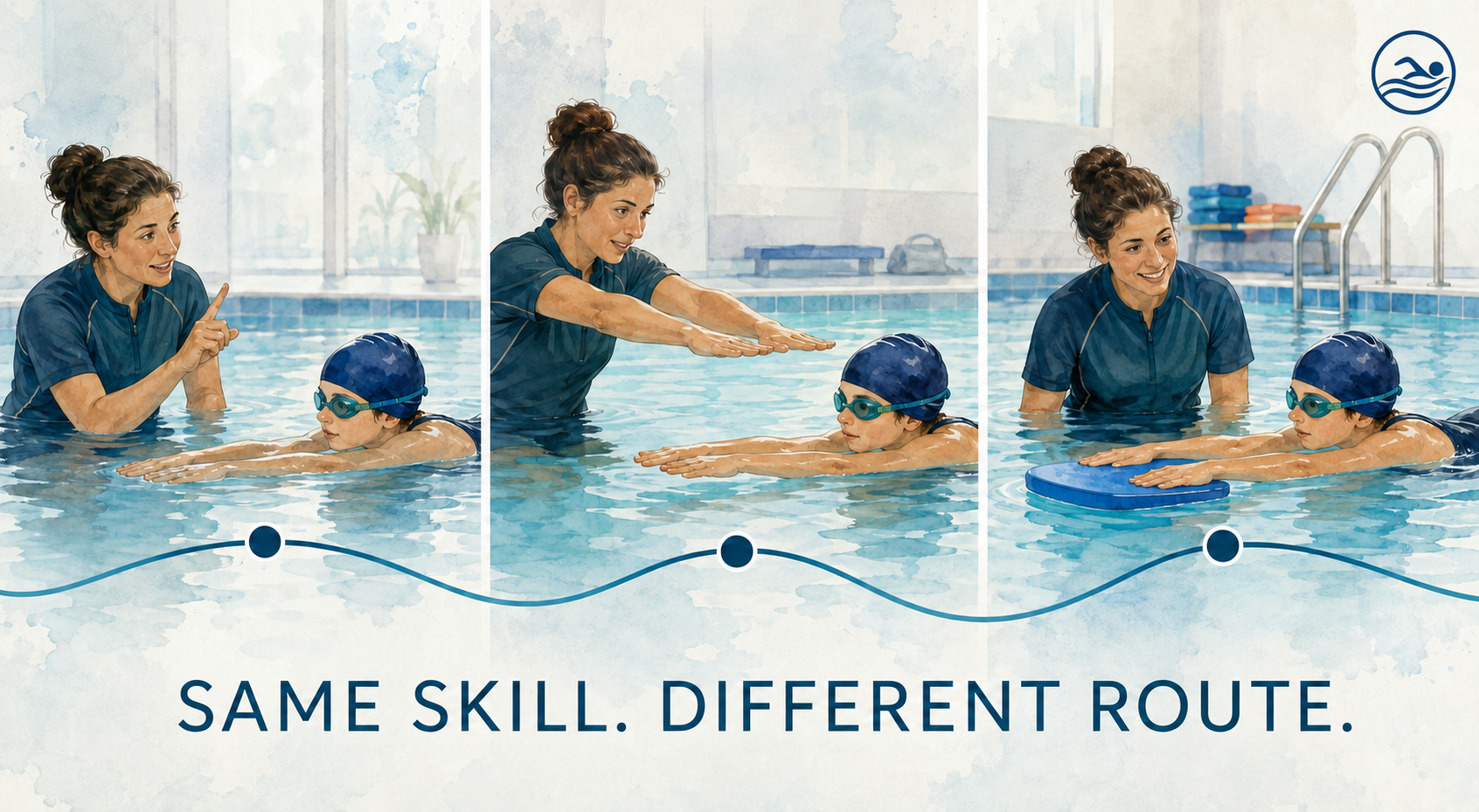
When a swimmer attempts a skill but does not quite achieve what the teacher is looking for, repeating the same instruction is rarely the answer. The skill may not need to change — the route into it might.

Why Repeating an Instruction Is Not Always the Answer
A swimmer attempts a skill but does not quite achieve what the teacher is looking for. The teacher explains it again. The swimmer tries again. The same thing happens, so the explanation becomes longer, louder or more detailed. Yet the movement remains unchanged.
At this point, it is tempting to assume that the swimmer cannot perform the skill or is not listening. But there is another possibility: perhaps the swimmer has listened, but the cue has not given them the information they need.
Repeating the same words does not necessarily make those words clearer.
"Keep your head still."
"Reach further."
"Kick from your hips."
"Relax."
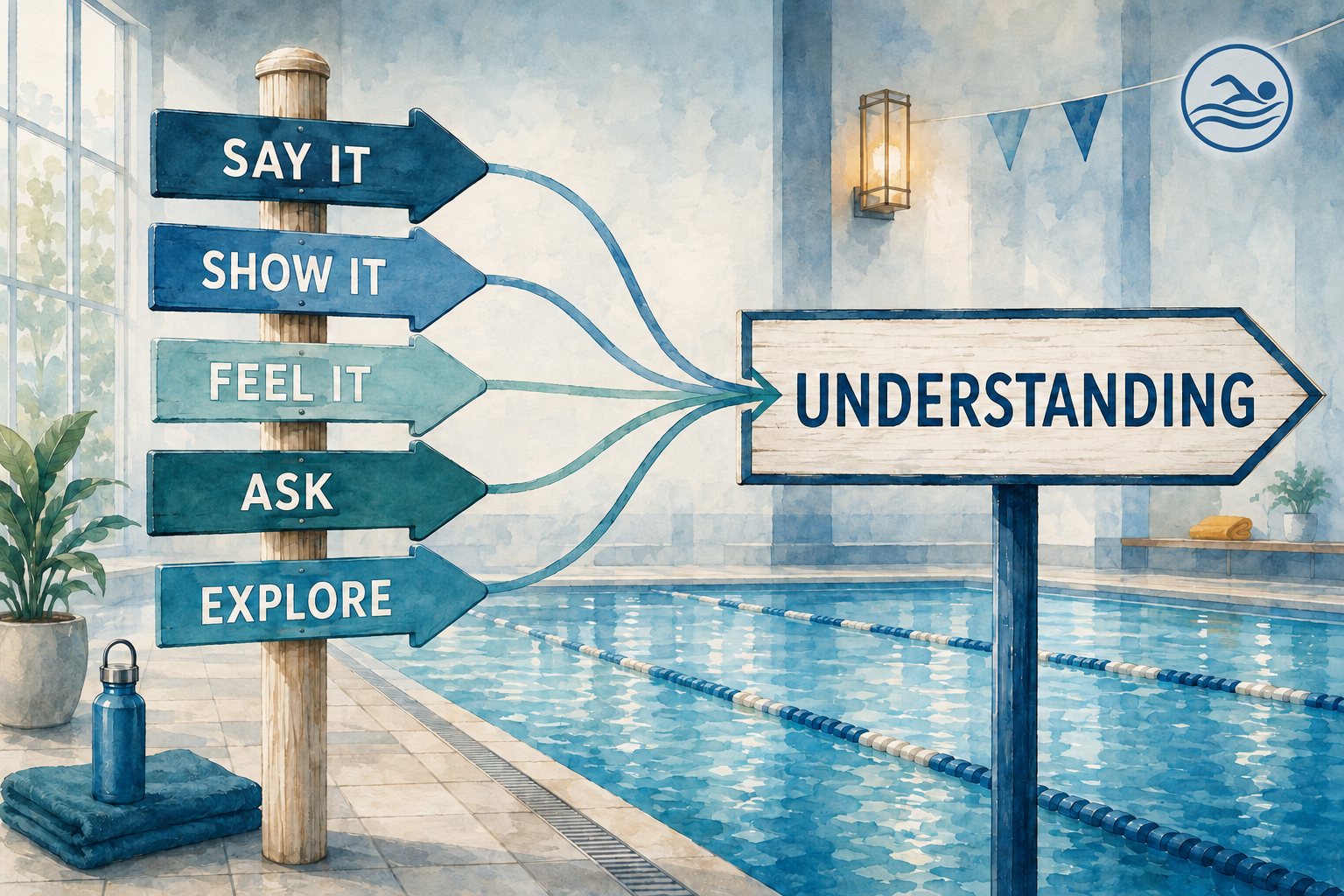
These may all be reasonable instructions, but they do not automatically create meaning for every swimmer. One person may respond to a short verbal cue. Another may need to see the movement, feel it, compare two different attempts or be given time to explore it for themselves.
The skill may not need to change. The route into the skill might.
Different Routes Into the Same Skill
A teacher could try any of the following:
- Shorten the instruction to one useful point
- Replace technical language with an image or analogy
- Demonstrate from a different position
- Use an agreed visual or hand signal
- Change the equipment or starting position
- Ask the swimmer what they felt
- Allow the swimmer to compare two ways of moving
This is not about searching for a clever phrase that works for everyone. It is about noticing when our first approach has not connected with the swimmer in front of us.
Before correcting the movement again, we might pause and ask:
Does the swimmer need a different skill — or simply a different way of understanding this one?
Becoming More Responsive
The Whole Swimmer explores this idea more fully through observation, communication, the learning environment and approaches such as STEP. The purpose is not to collect an endless list of clever cues, but to become more responsive to the swimmer in front of us.
On poolside, however, the immediate principle can remain simple:
If the first explanation does not help, do not merely repeat it.
Change the cue, change the route and watch what the swimmer shows you next.
Explore Topics
Written by
Michael D. Jones
Swim teacher, educator and writer exploring swimming, learning and teaching beyond the stroke.