Why Adults Hold Their Breath in the Water
Breathing difficulties in adult swimming involve more than technique. Understanding the swimmer's experience helps teachers choose a useful next step.

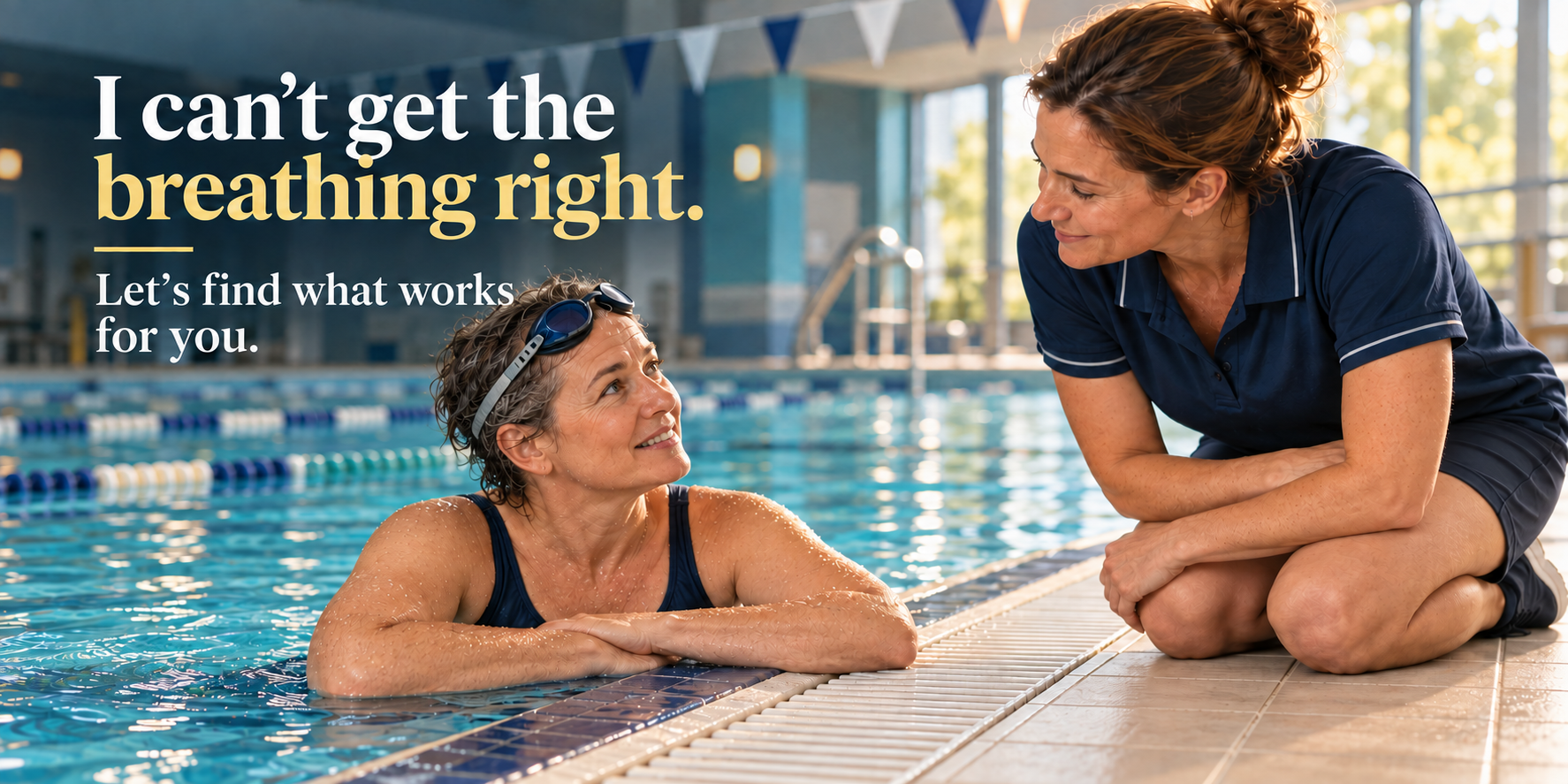
A female swimmer rests at the pool edge, takes a few hurried breaths and looks towards her teacher.
"I just can't get the breathing right."
It is a familiar moment in an adult swimming lesson. The teacher may have already explained when to breathe in, how to breathe out and where to turn the head. The swimmer understands the instructions. They may even be able to repeat them back. Yet, once they begin swimming, something changes.
They hold their breath, rush the next movement, lift their head or stop.
It is tempting to offer another instruction. "Blow bubbles." "Relax." "Turn your head a little earlier." Each may have a place, but before adding another cue, it helps to ask:
What is this swimmer experiencing when their face goes into the water?
For one person, the difficulty may be coordinating breathing with movement. For another, putting their face in the water still feels uncertain. Someone else may be concentrating so hard on their arms and legs that breathing becomes one more thing to remember.
From the poolside, these swimmers may look much the same. The support they need may be quite different.
Listen Before Adding Another Instruction
"I can't breathe" can mean several things to a swimmer.
They might mean that they cannot find a comfortable moment to breathe in. They might be holding their breath until they urgently want the next one. They might dislike water around their mouth and nose, or feel that everything happens too quickly.
A useful conversation begins with their experience:
- "What do you notice just before you stop?"
- "Does it feel difficult to breathe out, take the next breath, or put your face back in?"
- "What feels comfortable when you practise at the wall?"
These questions give the swimmer room to describe the difficulty in their own words. They also help us choose a more useful next step.
An adult brings a history into the pool, even when we know very little about it. There may have been previous lessons, an uncomfortable experience, years of avoiding water, or messages about swimming learned from family and community. There may simply be frustration from trying repeatedly without finding something that works.
We do not need to search for a hidden explanation or ask someone to share personal experiences they would rather keep private. We can make space for what they choose to tell us.
Sometimes the most helpful starting point is:
"Let's make this smaller and find out what feels manageable."
That might mean pausing the full stroke, returning to supported practice, or changing the explanation. It gives the swimmer a chance to explore one part of the task without having to manage everything at once.
When a Different Explanation Helps
I remember struggling with a subject at school, then finding it much easier when a college teacher explained it differently. The subject had not changed, but the way into it had.
The same can happen in swimming. A cue that makes immediate sense to one adult may leave another puzzled. Repeating it more often may not help. A demonstration, a different phrase or a simpler task might give them the connection they need.
This is part of the value a teacher brings: noticing how someone responds and finding an explanation they can use.
There is no need to invent something different simply to stand out. Familiar advice can be valuable when it is well chosen, clearly explained and offered at the right moment.
"But Someone Online Said…"
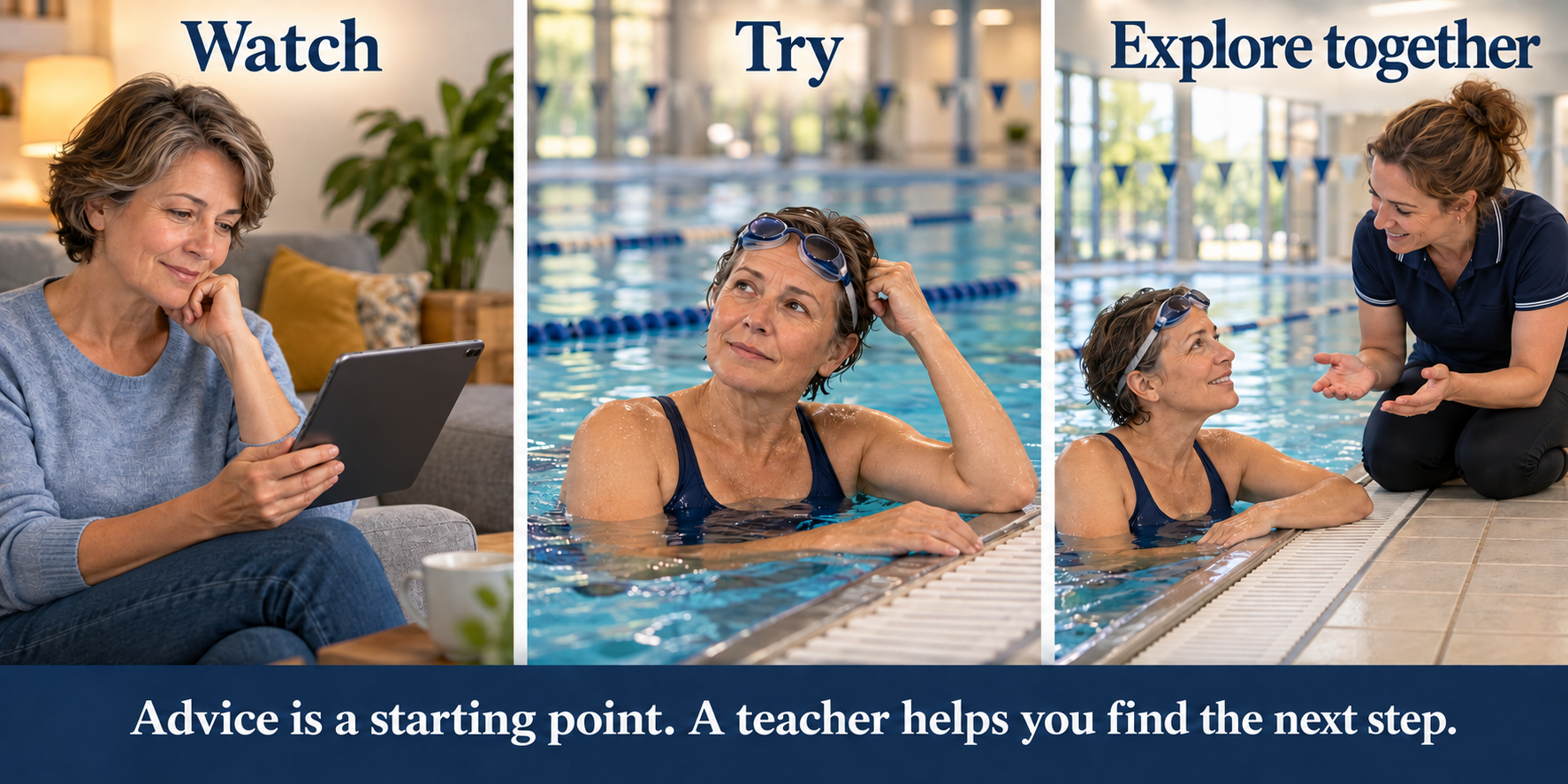
An adult may arrive having watched videos, read a book or followed advice on social media. That interest can be a useful starting point. They are trying to understand and improve.
Sometimes, though, they bring several instructions into the water at once. One source recommends a particular breathing pattern; another offers a different one. The swimmer tries to follow both while remembering everything from their lesson.
If it does not work, they may conclude that they are the problem.
Our response matters. Dismissing the source can make someone reluctant to ask questions. We can instead ask:
- "What were you hoping that advice would help with?"
- "Can you show me what you tried?"
- "What happened when you did it?"
Advice may have been intended for a swimmer with different skills, confidence or goals. A short video may also leave out the steps needed to reach the movement it demonstrates.
Some short videos present one approach confidently, but give little guidance on what to do if it does not work for you. The swimmer can replay the explanation, yet still be left wondering what they are doing wrong.
This is where the teacher's role becomes especially valuable. We can watch the attempt, listen to what the swimmer experiences and adjust the explanation, task or support. We can help them find the next step when the video has reached the end of its advice.
The useful question is whether it helps this swimmer with the difficulty they are experiencing now.
We can explore that together, choose one clear focus and give them time to notice its effect. Their curiosity then becomes part of the lesson, and we help them make sense of what they have found.
Make the Next Step Manageable
Once we have listened, we can choose a task that gives the swimmer something achievable to explore.
That may mean returning to supported practice at the wall, trying a brief face immersion with a gentle breath out, or swimming a short distance with one clear focus. The task should fit their confidence and ability, with support available when needed.
Explain what they are exploring and how they can stop. Let them choose when to begin, rather than feeling they must continue until they become uncomfortable.
Then ask what they noticed.
- "Did that feel easier, harder or much the same?"
- "Which part felt rushed?"
- "What would you like to try again?"
Their answer helps shape the next attempt. If it remains difficult, we can adjust the task, the support or the explanation.
Progress might be a calmer return to standing, a more comfortable breath out, or being able to explain where the difficulty begins. Those changes give us something useful to build on, even before the swimmer completes a longer distance.
Give Breathing Room to Develop
"Just relax" is easy to say from the poolside. It is much harder to act on when someone feels uncertain, hurried or overwhelmed by instructions.
We can help by reducing what they need to manage: one focus, a manageable task and enough time to become familiar with it. As confidence develops, we can gradually bring breathing back into the whole stroke.
We should also avoid assuming that every report of breathlessness is a technique problem. If a swimmer feels unwell or describes unusual or persistent symptoms, stop the activity and respond appropriately rather than encouraging them to push through.
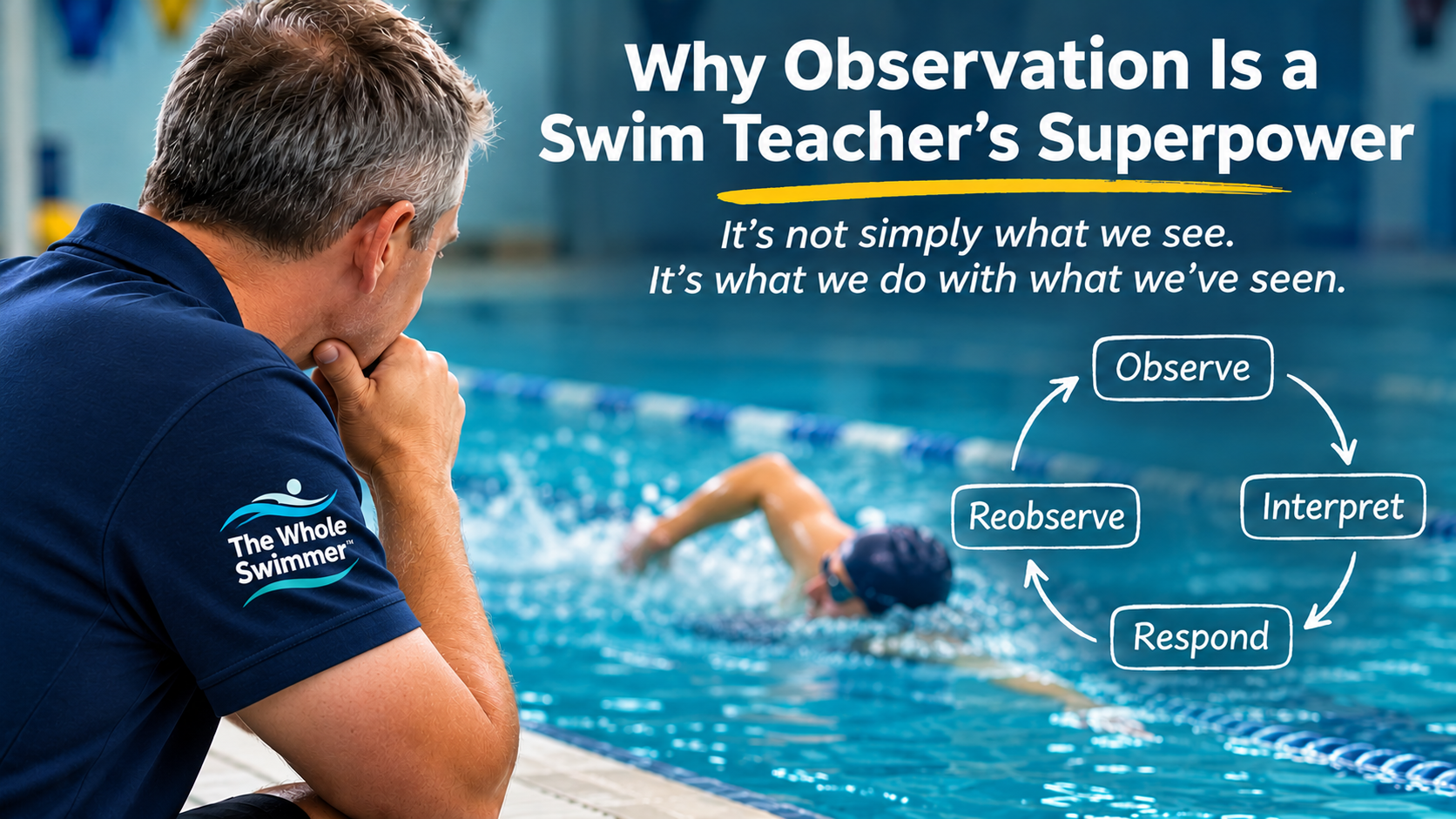
For the teacher, the starting point remains simple: observe, listen and choose the next step together.
The adult who stops halfway may already be trying very hard. Another instruction becomes more useful when we understand what they are trying to manage.
Before changing how an adult breathes, understand what breathing in the water feels like to them.
Poolside Pause
(/airo-assets/images/blog/breathing-difficulty-poolside-pause)
Poolside pause: When a swimmer says, "I can't get the breathing right," what do you ask before offering your next cue?
Explore Topics
Written by
Michael D. Jones
Swim teacher, educator and writer exploring swimming, learning and teaching beyond the stroke.